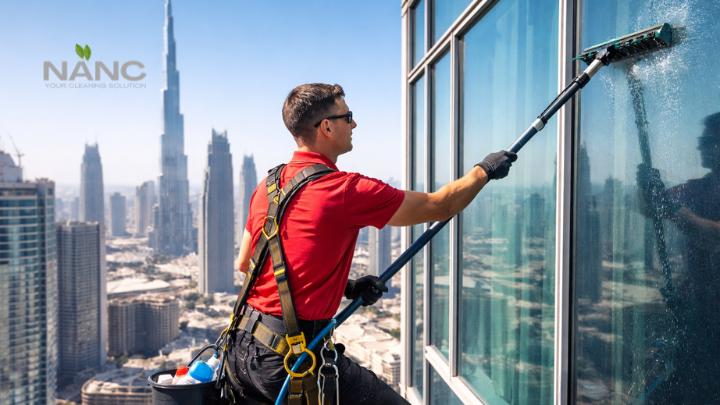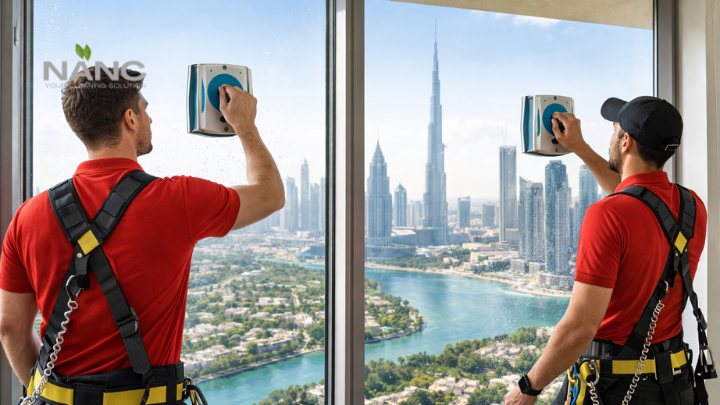
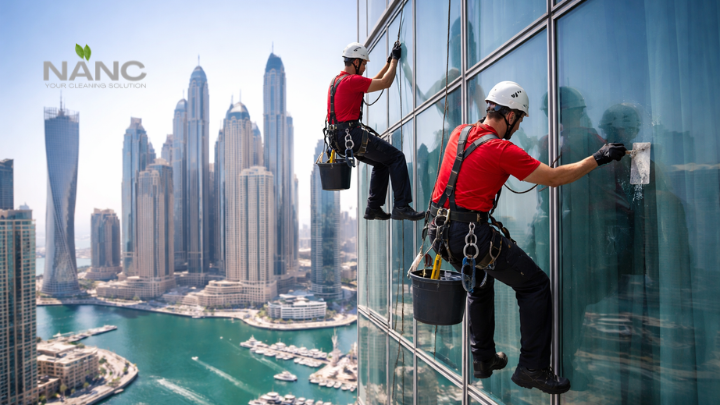
Dubai’s skyline, featuring high-rise towers in areas like Dubai Marina, Downtown Dubai, and Business Bay, requires specialized maintenance for its large glass façades. High-rise window cleaning is strictly regulated due to height risks, wind conditions, and public safety concerns. Authorities such as Dubai Municipality enforce safety standards to protect workers, residents, and pedestrians, and non-compliance can result in serious injuries, fines, legal liability, and insurance complications. For property owners and facility managers, hiring certified professionals is essential to ensure safety, legal compliance, and the preservation of asset value.
1. Why High-Rise Window Cleaning Is a High-Risk Activity in Dubai
Window cleaning in Dubai presents significant safety challenges due to the extreme heights of residential and commercial towers. Working at elevation increases the risk of falls, equipment failure, and serious injuries if proper safety systems are not in place, and even minor errors can have life-threatening consequences. Dubai’s unique environmental conditions such as strong wind gusts, seasonal sandstorms, and high temperatures further increase these risks, making professional risk assessment and planning essential before any cleaning operation.
The modern glass façades in areas like Dubai Marina, Downtown Dubai, and Business Bay add another layer of complexity, with curved designs, full-glass exteriors, and limited anchor points requiring specialized equipment and certified rope access technicians. Public safety is also a concern, as falling tools, water runoff, or unsecured equipment can endanger pedestrians, vehicles, and nearby properties. For these reasons, high-rise window cleaning in Dubai is strictly regulated and considered a high-risk activity, demanding strict compliance and professional oversight.
2. Regulatory Authorities Governing High-Rise Safety in Dubai
High-rise window cleaning in Dubai is strictly regulated to protect public safety, workers, and building compliance. Dubai Municipality plays a key role in enforcing safety standards, including approved equipment use, contractor licensing, and working-at-height procedures. Service providers must adhere to these municipal guidelines to ensure all operations meet legal and safety requirements.
Dubai Civil Defence oversees broader safety measures such as emergency preparedness, risk management, and fire and life-safety compliance, ensuring that exterior maintenance does not endanger occupants or the public. Building management companies and property developers are also responsible for verifying contractor certifications, insurance coverage, and safety documentation before approving work. Hiring municipality-approved contractors is essential to avoid fines, regulatory violations, and liability risks while maintaining full compliance with Dubai’s safety framework.
3. Mandatory Safety Requirements for High-Rise Window Cleaning
High-rise window cleaning in Dubai must follow strict safety standards to prevent serious injuries, legal violations, and public hazards. Compliance is not optional, it is a legal and operational requirement for any building maintenance activity at height.
Certified and Trained Technicians
Only properly trained professionals should perform high-rise window cleaning. Technicians must hold valid working-at-height certifications and specialized rope access training that meets UAE safety standards. These qualifications ensure they understand fall protection systems, controlled descent procedures, and hazard management.
Professional supervision is equally important. A qualified safety supervisor must oversee operations, verify anchor points, monitor weather conditions, and ensure that all procedures follow guidelines set by authorities such as Dubai Municipality.
Approved Safety Equipment
Safety equipment must meet UAE compliance standards. This includes full-body harness systems designed for fall arrest, certified anchoring systems installed on rooftops, and properly inspected rope access gear.
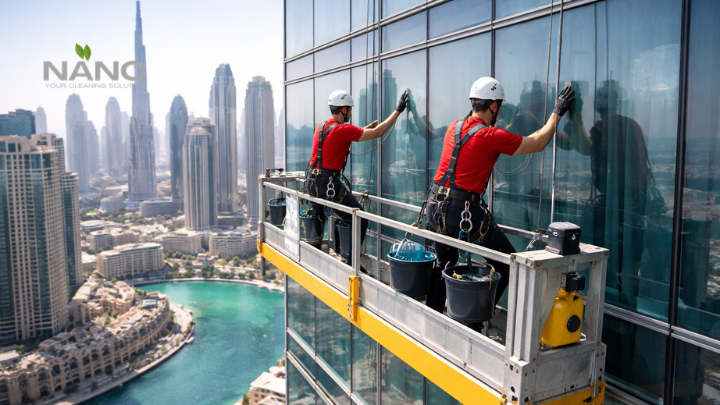
Technicians are also required to use protective equipment such as safety helmets, gloves, and anti-slip footwear to reduce risk. In many high-rise buildings, suspended platforms and cradle systems are used for controlled and stable exterior access, especially on large glass façades.
Risk Assessment & Method Statement (RAMS)
Before any work begins, a detailed Risk Assessment and Method Statement (RAMS) must be prepared. This includes identifying potential fall hazards, securing tools to prevent falling objects, and assessing building-specific risks.
Weather checks are mandatory in Dubai due to strong winds and sandstorms. Work must be postponed if conditions are unsafe. An emergency response plan must also be in place, outlining rescue procedures, communication protocols, and first-aid readiness.
These mandatory safety measures are designed to protect workers, residents, pedestrians, and property making professional compliance essential for high-rise window cleaning in Dubai.
4. Weather and Environmental Safety Considerations in Dubai
Weather is a critical factor for high-rise window cleaning safety in Dubai, affecting worker stability, equipment performance, and public protection.
- High wind speed restrictions: Strong gusts at tower heights, especially in areas like Dubai Marina, can destabilize rope access systems and suspended platforms. Work must pause if winds exceed approved limits.
- Sandstorms: Reduce visibility, impair technician coordination, decrease grip on glass surfaces and safety ropes, and interfere with anchor systems.
- Extreme summer heat: Prolonged exposure can cause dehydration, heat exhaustion, and reduced concentration, increasing human error risk. Proper hydration and heat-risk assessments are essential.
- Safe scheduling practices: Contractors perform pre-work weather checks, avoid peak heat hours, and monitor conditions in real-time.
- Authorities like Dubai Municipality require risk-based decision-making to ensure environmental conditions do not compromise worker or public safety.
5. Legal Consequences of Non-Compliance in Dubai
Failing to comply with high-rise window cleaning regulations in Dubai can result in serious legal and financial consequences for property owners, facility managers, and contractors. Regulatory authorities such as Dubai Municipality and Dubai Civil Defence can impose substantial fines for safety violations or the use of unlicensed contractors. Non-compliance may also lead to project shutdowns until proper approvals and safety measures are implemented.
Civil liability is another major risk if unsafe cleaning practices cause injuries to workers, residents, or pedestrians, or if property damage occurs. Insurance claims may be denied if contractors lack valid licenses, certifications, or safety compliance documentation. For Dubai property stakeholders, strict adherence to regulations is essential to protect lives, avoid penalties, and maintain full legal and financial security.
6. Responsibilities of Property Owners and Facility Managers
Verify Contractor Licenses and Certifications – Ensure all contractors hold valid licenses and professional certifications to protect workers and residents.
Confirm Insurance Coverage – Check that contractors have adequate public liability and worker compensation insurance to mitigate financial risks from accidents.
Check Technician Safety Certifications – Ensure all technicians are trained in working at height, rope access, and emergency procedures for safe operations.
Inspect Anchor Points and Equipment – Regularly inspect anchor points, harnesses, and safety gear to maintain ongoing compliance with Dubai safety standards.
Maintain Legal and Property Compliance – By taking these proactive steps, property owners and managers reduce liability, uphold regulations, and preserve the value and integrity of their buildings.
7. Insurance and Liability Coverage Requirements
High-rise window cleaning in Dubai requires comprehensive insurance and liability coverage to protect workers, residents, and property owners. Worker compensation coverage ensures technicians are financially protected in case of accidents, while third-party liability insurance safeguards property owners against damages or injuries that may occur during cleaning operations.
Before approving any project, it is essential to verify proper documentation, including contractor licenses, insurance certificates, and safety compliance records. Written service agreements should clearly define responsibilities, safety protocols, and liability terms, reducing legal risks and misunderstandings. Maintaining these standards ensures regulatory compliance, builds client trust, and minimizes potential financial and legal exposure.
8. How Professional Window Cleaning Companies Ensure Compliance
Professional window cleaning companies in Dubai maintain strict adherence to safety and regulatory standards to protect workers, residents, and property. They conduct regular staff training updates to ensure technicians are current on working-at-height procedures, rope access techniques, and emergency response protocols.
The use of certified safety supervisors on every project ensures that operations are monitored and executed according to UAE safety regulations. Companies also provide compliance documentation to clients, including licenses, insurance certificates, and risk assessments, demonstrating transparency and accountability.
By following transparent safety protocols and industry best practices, these companies minimize risks, maintain legal compliance, and uphold high standards of professional responsibility without compromising quality or efficiency.
Conclusion
High-rise window cleaning in Dubai carries inherent risks that make strict regulation compliance essential. Following safety standards protects lives, prevents property damage, and safeguards the reputation of building owners and facility managers.
Hiring certified, municipality-approved professionals ensures that all work meets Dubai-specific safety regulations, uses proper equipment, and follows established risk management protocols. By prioritizing compliance, property stakeholders not only maintain the integrity of their buildings but also contribute to a safer environment for residents, workers, and the public.